Elevating Material Intelligence: The New Era of Natural Wood Veneers
In the realm of contemporary material strategy, natural wood veneers are
undergoing a quiet but unmistakable renaissance—one driven less by nostalgia
for organic surfaces and more by the architectural appetite for intelligent,
high-performance finishes. Today’s veneer applications revolve around
controlled aesthetics, sustainable yield, digital-enabled pattern curation, and
the increasingly precise engineering of substrates, adhesives, and finishing
systems.
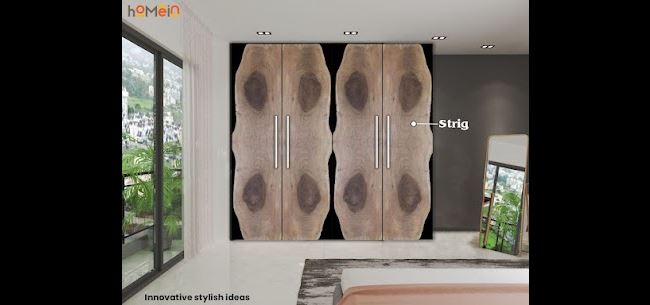
What distinguishes the current veneer landscape is the shift from material selection
to material direction. Designers no longer simply choose
species—they orchestrate veneer sequencing with an almost algorithmic
intentionality. End-grain mosaics, slip-matched flitches that modulate grain
direction to manipulate perceived height or width, and progressive book matching
across multi-panel installations are now integral to spatial narratives. These
aren’t decorative choices; they are psychological and optical interventions.
Another advanced driver is the expanding conversation around yield
optimization. High-grade lumber scarcity has accelerated the use of
rotary-cut and engineered veneers that maintain the chromatic and tactile
identity of prized species while maximizing log utilization. In premium
interiors—boutique hospitality, luxury retail, yacht design—the veneer’s
provenance and its material efficiency profile increasingly sit side-by-side in
project briefs. Specifiers want to see the FSC paperwork, but they also want to
know how many linear meters of consistent figure a log produced, and how the
supplier mitigated run-out and color shift across batches.
Performance expectations have also evolved. Natural veneers are being
engineered to coexist with environments previously considered
incompatible—hospitality bathrooms, high-traffic transit lounges, marine cabins
with fluctuating humidity. Cross-laminated backings, thermosetting resin
impregnation, and micro-thin abrasion-resistant topcoats redefine what a
“natural” veneer can endure. The best manufacturers now publish detailed
hygroscopic movement curves, allowing millworkers to model expansion tolerances
with far greater confidence.
The intersection of veneers and technology has become
particularly compelling. Digital grain mapping—a technique where logs are
scanned and cataloged before slicing—gives designers the ability to preview
flitches in 3D and simulate sequence layouts prior to fabrication. This reduces
waste, accelerates approvals, and allows global teams to collaborate on
aesthetic decisions long before material hits the press. Some studios take the
approach further, integrating parametric tools that generate grain-aware
panelization logic, optimizing both visual flow and cutting efficiency.
In luxury contexts, veneers increasingly serve as a counterpoint to the
algorithmic, hyper-refined feel of contemporary interiors. Exotic
species—Macassar ebony, figured anigre, bird’s-eye maple—are resurging, but
with a twist: the most forward-looking projects balance these opulent surfaces
with minimalistic geometries, matte finishes, and precise metal inlays. The veneer
becomes a narrative artifact, not a nostalgic accent.
Ultimately, the sophistication of natural wood veneers today lies not in the
material itself, but in the systems thinking surrounding their
use. Architects, fabricators, and manufacturers collaborate in a feedback loop
that integrates environmental metrics, digital visualization, engineered
resilience, and sensory intent. Veneers have moved from being a cost-efficient
alternative to solid wood to becoming a calculated design instrument—one that
mediates between nature’s unpredictability and the controlled ambition of
modern architecture.
For More Related Contents Visit Our
Website:
Website: https://homeinveneers.com
Follow Us
On: Whatsapp, Facebook, Instagram, YouTube, LinkedIn, Pinterest
|











.jpg)