|
There are materials that speak loudly—stone that insists on permanence,
metal that boasts precision, glass that declares its transparency. And then
there are materials that whisper. Natural wood veneers belong
to that quiet lineage, offering their stories not through mass, but through a
delicate thinness that reveals more than it hides. In contemporary design,
these veneers have become not merely surface treatments, but poetic
instruments, shaping atmospheres with a subtleness that architects and
artists increasingly treasure. 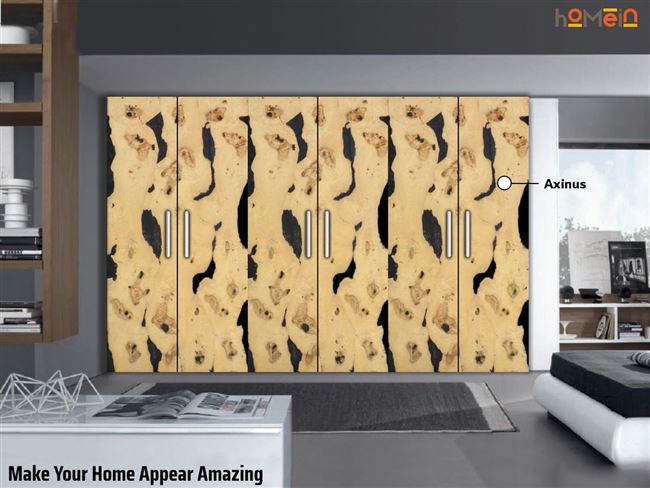
A veneer is, in essence, a memory—one captured in the gentlest possible
form. When a log is opened, sliced, or peeled, the grain emerges like script on
an ancient manuscript. Each mark becomes a line of narrative: the slow ascents
and sudden drops of cathedral patterns, the rhythmic pulse of straight grain,
the unpredictable flare of fiddleback figure. To work with veneers is to engage
in a kind of literary editing, sequencing flitches not by technical necessity
alone, but by the emotional cadence they create when placed side by side.
In hands guided by intuition, veneers can shape mood as much as
space. A wall clad in pale, satin-finished ash becomes daylight made
tangible—soft, weightless, almost translucent. By contrast, a deep walnut panel
absorbs light into itself, creating pockets of intimacy and shadow that slow
time. Some designers speak of veneers the way painters refer to pigments: the
warm undertone of cherry as a note of optimism, the smoky austerity of wenge as
an anchor of calm, the golden shimmer of anigre as a gesture of quiet luxury.
But veneer artistry is not confined to color or figure. Its true magic lies
in seamlessness, in the way thin sheets—aligned with exacting
precision—can transform entire surfaces into continuous landscapes. A door
becomes a horizon line. A wall unfolds like a long scroll. A ceiling becomes a
canopy of frozen motion, grain lines drifting overhead like wind patterns.
These effects rely not only on craftsmanship but on an almost musical sense of rhythm,
where the spacing between moments of dramatic figure or subtle texture
determines the emotional flow of a room.
What makes veneers so compelling is the paradox they embody: fragility
paired with endurance. They are delicate enough to transmit the finest details
of the tree’s life, yet when balanced on engineered substrates, they gain a
resilience that belies their thinness. This duality speaks to a deeper truth
about contemporary design—the desire to merge authenticity with performance,
poetry with structure.
In the most inspired applications, veneers transcend ornamentation entirely.
They become atmospheric instruments, tuning a space like a
resonant chamber. The grain guides the eye, the finish modulates light, the
texture invites touch. The room breathes differently because the veneer has
given it a new skin.
And perhaps that is the greatest gift of natural wood veneers: they remind
us that beauty need not shout. Sometimes, the most profound experiences in
architecture arrive not through grand gestures, but through the quiet eloquence
of a thin slice of nature, speaking softly across the surfaces it adorns.
For More Related Contents Visit Our
Website:
Website: https://homeinveneers.com
Follow Us
On: Whatsapp, Facebook, Instagram, YouTube, LinkedIn, Pinterest
|











.jpg)